
Simple Foods to Include in a Daily Winter Routine
Daily routines often change with the seasons. In winter, people may spend more time indoors, move less, and lean toward heavier or more familiar meals. This is one reason why simple food habits can be especially useful during colder months. Rather than trying to completely redesign the diet, many people benefit from identifying a few dependable foods they can include regularly. These foods do not need to be expensive, rare, or complicated. In many cases, the most effective choices are ordinary ingredients that fit easily into breakfast, lunch, dinner, and snacks.
One of the most useful foods to include in a winter routine is oatmeal. It is warm, affordable, and easy to prepare. Oatmeal can be adjusted in many ways, depending on personal taste and household habits. Some people add sliced fruit, seeds, nuts, or plain yogurt. Others prefer cinnamon, chopped apples, or a spoonful of nut butter. Because it is easy to customize, oatmeal can work for both busy mornings and slower weekends. It is a simple example of how one basic food can become part of a long-term routine.
Soup is another practical option for everyday meals in cold weather. Homemade or store-bought soups can be adapted to different preferences and schedules. Vegetable soups, lentil soups, chicken and rice soups, or bean-based soups can all fit into a balanced eating pattern. Soup can also be a useful way to combine several food groups in one meal. Adding vegetables, grains, and a protein source can make it more complete and satisfying. For many people, soup is not only convenient but also comforting during colder days.
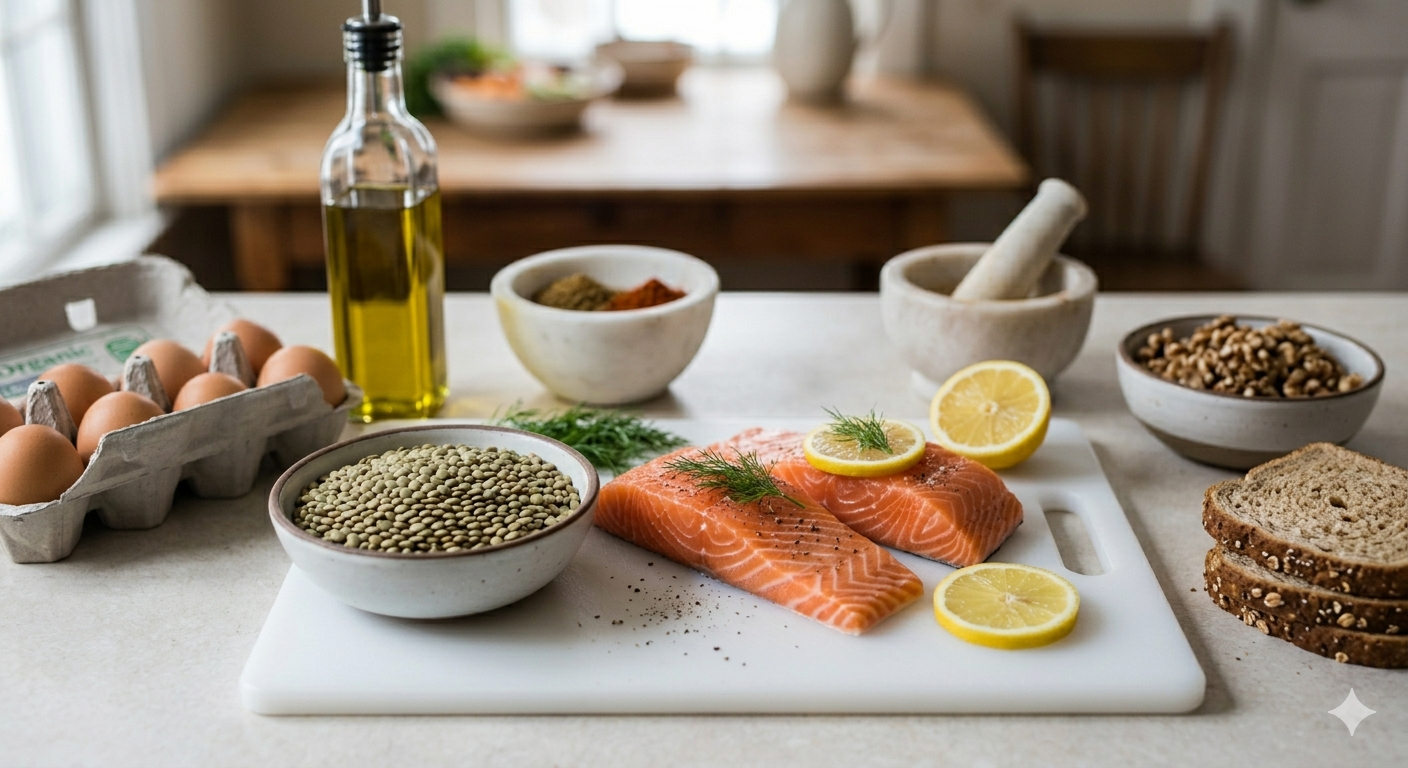
Eggs are a versatile food that can be included in many meals. They work well for breakfast, lunch, or dinner and pair easily with vegetables, toast, rice, or potatoes. A simple egg-based meal with spinach and whole grain toast can be prepared quickly, which makes it useful on busy days. Hard-boiled eggs can also be kept in the refrigerator for easy snacks or meal additions. Foods that are flexible like this often make daily routines easier to maintain.
Yogurt is another helpful staple for everyday meal planning. It can be eaten on its own, mixed with fruit, added to breakfast bowls, or used as part of a snack. Plain yogurt is often a flexible choice because it can be combined with both sweet and savory foods. It can also work as a base for simple sauces or dips. Keeping foods like yogurt at home can make it easier to assemble quick meals or snacks without relying entirely on packaged convenience items.
Seasonal fruits can also support variety in daily winter meals. Apples, pears, and citrus fruits are common choices in many regions during colder months. They are easy to store and simple to eat on their own or add to meals. Fruit can be sliced into oatmeal, served with yogurt, or packed as a snack for work or school. Having visible, ready-to-eat fruit in the kitchen is a small but practical habit that may encourage more balanced choices during the week.
Vegetables remain important in winter, even if salads become less appealing than they are in warmer months. Roasted vegetables, steamed greens, baked squash, or sautéed carrots can feel more suitable for the season. Frozen vegetables are also worth considering because they are easy to prepare and can be added to soups, rice dishes, pasta, or egg meals. Choosing vegetables in forms that feel convenient is often more realistic than aiming for perfect meal preparation every day.
Whole grain foods can also help create structure in a winter routine. Brown rice, oats, whole grain bread, quinoa, and other similar foods are simple building blocks for meals. They pair well with vegetables and proteins and can be cooked in batches to save time. For example, having cooked rice or quinoa ready in the refrigerator can make it easier to assemble a warm lunch or dinner in just a few minutes.
Nuts, seeds, and legumes are useful foods to keep on hand as well. They are practical for snacks and can also be added to meals for texture and variety. Beans and lentils work well in soups, stews, and grain bowls, while nuts and seeds can be sprinkled on breakfast dishes or yogurt. These ingredients are simple, shelf-stable, and adaptable, which makes them convenient for regular use.
The idea behind everyday wellness foods is not perfection. It is about choosing simple, familiar foods that can support a steady routine. When meals are built around practical staples, healthy eating often becomes more manageable. Winter routines do not need to be strict or complicated. With a few dependable foods on hand, it becomes easier to create meals that are warm, balanced, and realistic for daily life.